
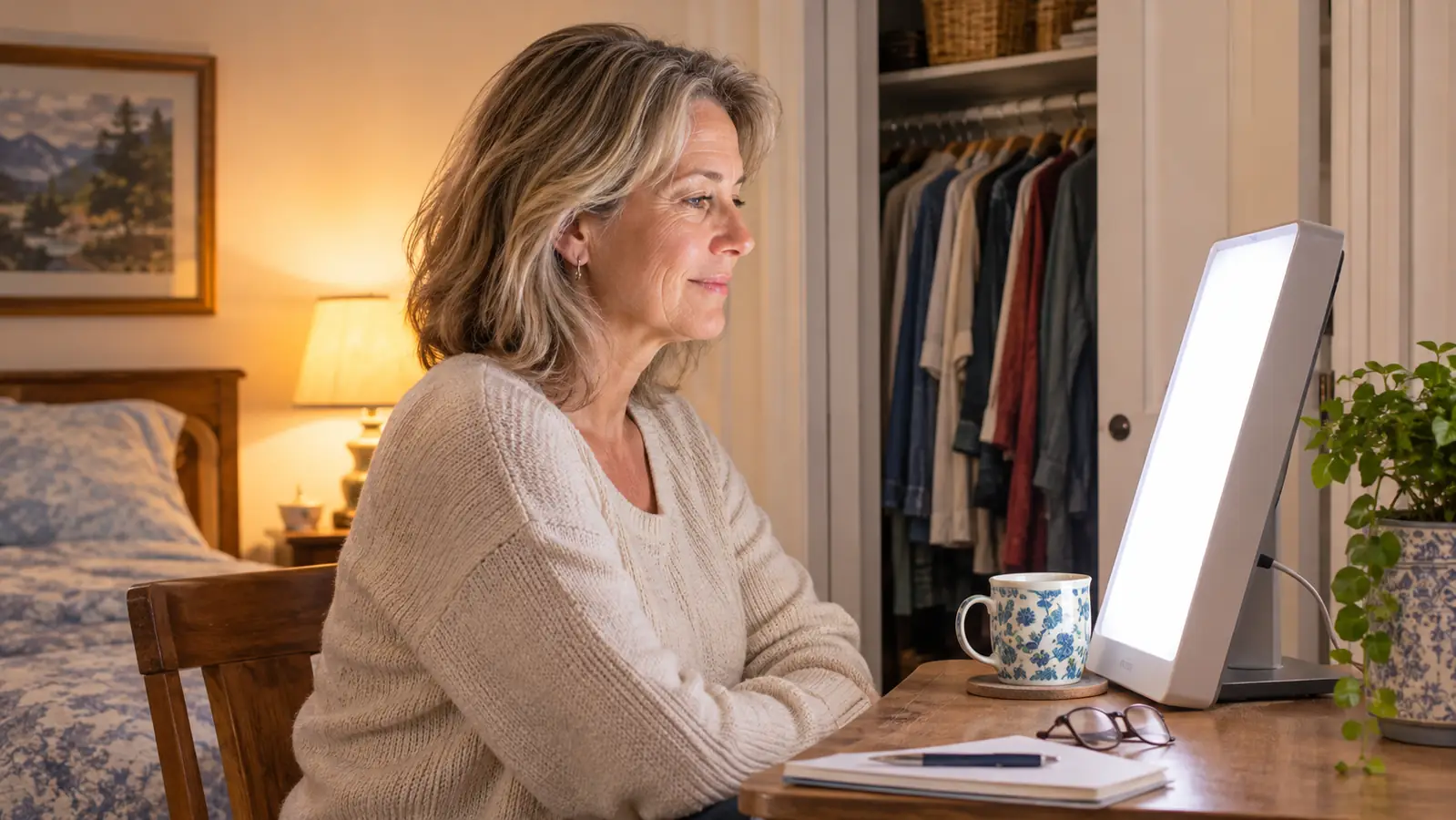
I did not buy a red light panel because I thought it would change my life. I bought it because my skin routine had turned into a pile of half-used bottles and a nagging feeling that I was making it more complicated than it needed to be. I am 57, retired from dental hygiene, and I live in Boise with my husband, Dan. My knees get stiff after I hike the Boise foothills, and my face has the usual history of a woman my age who spent too many summers outside. My dermatologist said it was fine to try a red light panel. She also told me to keep my expectations ordinary. That was the most useful advice I got.
So this is not a clinic protocol. It is how I fit the Bestqool BQ60 panel into a normal week in our single-story house. The panel lives on a folding table in the spare bedroom, by the closet, and I use it in the evening. I am writing about my own routine and how it felt to me. This is wellness use only, not medical advice. If you have photosensitivity, take medications that make you sensitive to light, are pregnant, or have a history of skin cancer, talk to your doctor or dermatologist before you start.
The Panel That Fit on My Folding Table
I did not want a device that needed its own room. The Bestqool BQ60 is 8.4 by 2.1 by 13.1 inches and 4.8 pounds, and it earned a spot by the closet because I actually walk past it.
Amazon See the Bestqool Panel on Amazon →Step 1: Pick a Spot You Will Actually Walk Into
The first thing I did was not a session. It was a walk through the house. I looked at the bathroom, the kitchen counter, and the living room. None of them fit. The bathroom mirror made me stare at my face, the kitchen counter is where Dan sorts mail, and the living room is where we watch the news. The spare bedroom won because it is quiet and I already go in there to put away laundry.
Before I settled on it, I tried the bathroom for four nights in a row. I set the panel on a cutting board across the sink so it would not slide, and by the second night I had knocked it crooked twice and splashed water on the table. The panel is 8.4 by 2.1 by 13.1 inches and 4.8 pounds, which is small enough to move and too small to share a sink with a hair dryer and a toothbrush cup. That experiment lasted less than a week and told me more than any review could.
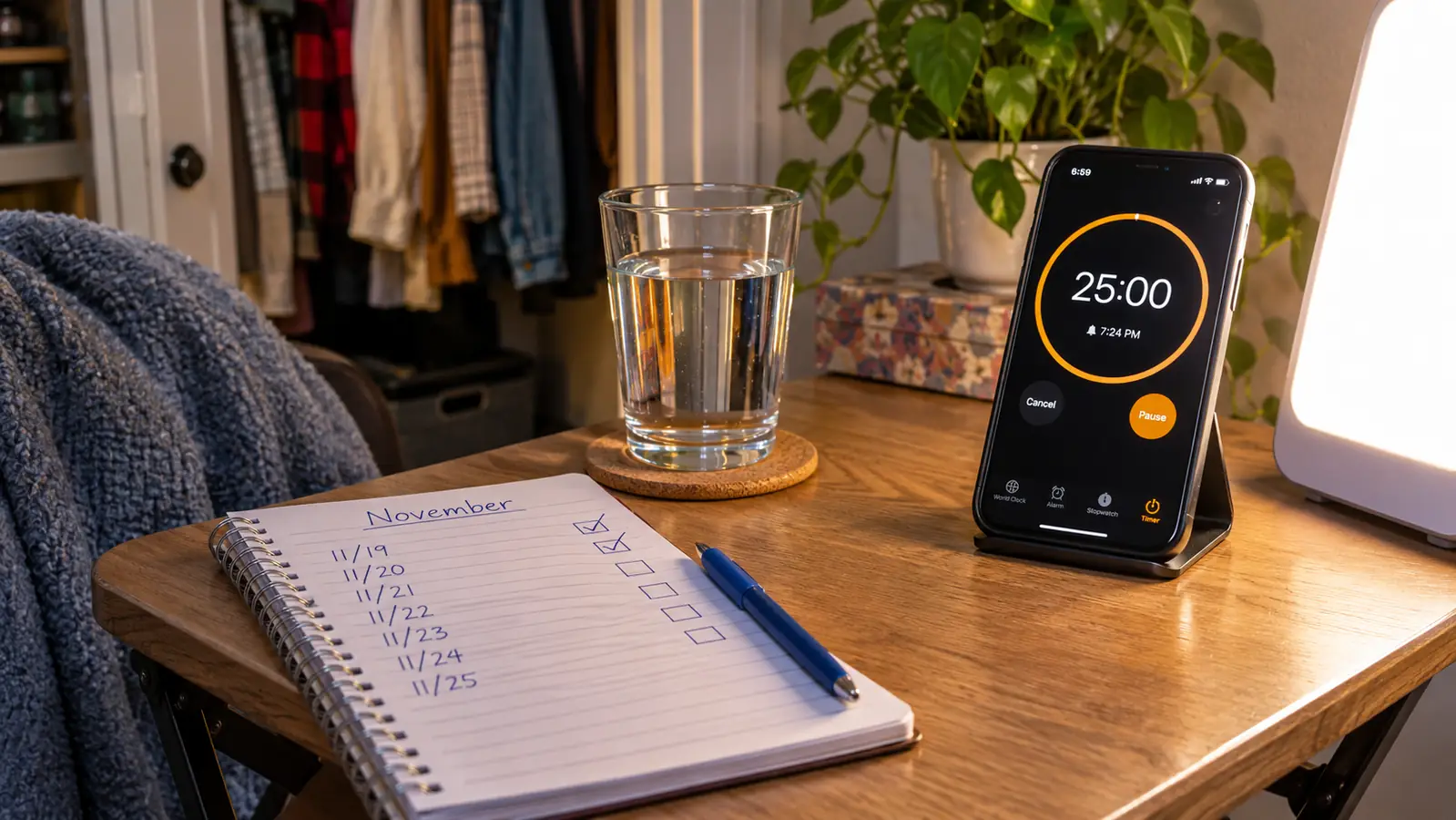
I also left room on the table for a notebook, a glass of water, and my phone. Dan borrows the panel now and then, so I did not pile laundry on the table. A clear table is not a decoration. It is the difference between a routine and a good intention.
Step 2: Read the Manual Before the First Session
I read the manual twice. I am the person who reads the manual. The panel has three modes, and the listing says the dual-chip LEDs emit 660nm red and 850nm near-infrared light. The panel is 105W. I wanted to know what those numbers meant before I stood in front of it.
The number that made me pay attention was 95.6 mW/cm2 at 3 inches. That is the irradiance at a specific distance. It told me distance is part of the routine, not an afterthought. I measured once with a tape and put a small piece of painter's tape on the floor where I sit. I do not measure every night. I just wanted a starting point I could repeat. My first attempt was a guess, maybe eighteen inches back because the light felt bright, and I could not have told you what I did differently from one night to the next. The tape fixed that.
I also read the part about the three modes. The listing says the modes adapt to workout, face, body, and more. I picked one mode and stayed with it for a week before I changed anything. That is not a rule from a doctor. It is how I keep myself from turning a simple session into a project. Dan made fun of me for the tape. Then he stood on it himself.
Step 3: Keep the Session Short and Boring
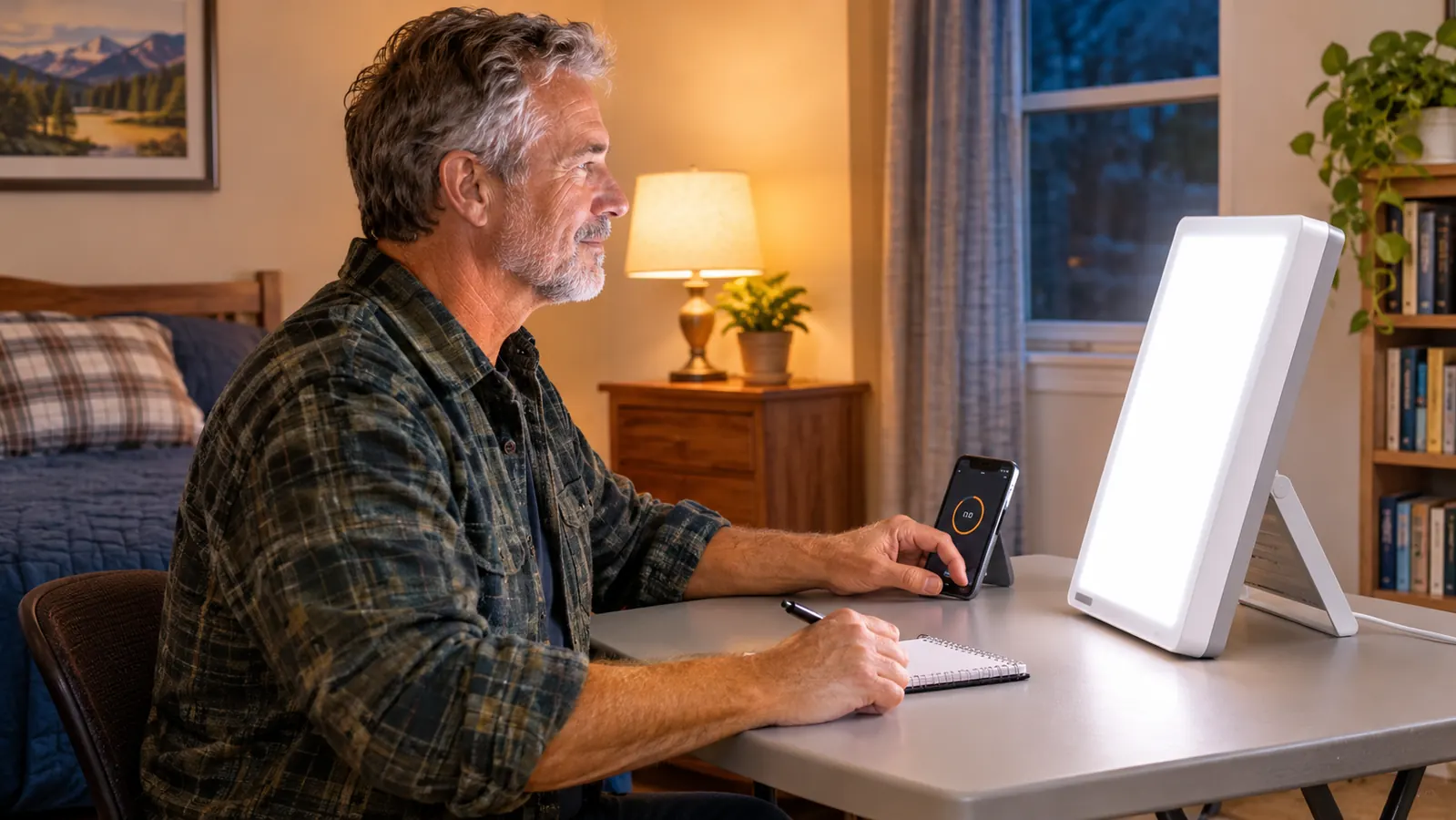
My sessions are short. I set a timer on my phone, and I sit facing the panel at the distance I marked. I use eye protection. I do not count the minutes as a score, and I do not add time because I have a free evening. Short and boring is the goal.
The panel is a light panel, not a tanning bed and not a spa. I do not chase a big session. If my skin feels warm or tight, I stop and try again another day. If I am rushed, I skip it. A routine that makes me feel behind is not a routine I will keep.
I use it on my face first, then I turn my chair and use it on my knees. I use one of the three modes for my face and another for my knees. The listing says the panel is for face, body, and more, so I did not buy a second device. I keep the mode I use written on a sticky note on the table. That sounds small. It saves me from standing there trying to remember.
The panel is 4.8 pounds and 13.1 inches tall. The hard part was not lifting it. The hard part was making it a habit.
Step 4: Make It a Habit, Not a Project
I use the Bestqool panel after dinner, most days of the week. I do not use it at noon, because noon is when I run errands or meet a friend. Evening is when I am home and when the spare bedroom is quiet. I miss days. I do not punish myself. I just go back the next evening.
What helped more than willpower was attaching it to something I already do. I load the dishwasher, wipe the counter, and then walk to the spare bedroom. Same order, most nights. On the nights I skipped, it was almost always because I sat down in the living room first. Once I am in that chair, the evening is gone. So the rule in our house is simple: panel before chair.
Dan uses it now and then. He likes it after yard work. He did not read the manual twice, so I made him read it once. We keep a notebook on the table. He writes down the date and the mode he used. I write down the same thing. It is not a medical log. It is a simple record so we are not guessing.
I do not use an app. I use the timer on my phone. I do not need a notification to tell me to walk into the spare bedroom. The panel has three modes, and I keep the one I use written on a sticky note. The routine is low-tech on purpose. The more steps I add, the less likely I am to do it.
Step 5: Track What You Notice and What You Do Not
I keep a small notebook in the table drawer. I write the date, the mode, how long I sat, and how my skin felt. I do not write a medical log. I write what I would tell a friend at the kitchen table. That means plain words. Warm. Tight. Fine. Tired. Nothing dramatic.
I started the notebook on a Tuesday in the middle of that first week, and I dated every entry, even the boring ones. Two of them read, in their entirety, "skipped, too tired." I left those in. If I only wrote the good nights, the notebook would flatter me and teach me nothing.
The first two weeks were boring. That is the point. I did not see a dramatic change in a week, and I would be suspicious of anyone who promised one. What I noticed was that my routine was simpler. I was not standing in the bathroom with five bottles. I was sitting in a quiet room for a short session, and then I was done.
After a month, I took the notebook to my dermatologist. She looked at it and said to keep doing what I was doing and to come back if anything changed. I am not a doctor, and I am not telling you what your dermatologist will say. I am telling you that a notebook is more useful than a vague memory. If you try a panel, write it down.
What Else Helps
The panel is one small piece of my week. I wash my face, use a plain moisturizer, and wear sunscreen when I am outside. I drink water. I walk. I try to sleep. None of that is exciting, and none of it is a replacement for a doctor. It is just the rest of the routine that makes the panel feel like part of my life instead of a gadget on a table.
I keep the spare bedroom tidy. I keep the eye protection in the table drawer and the manual in the same drawer. I keep the phone timer on the table, not in my pocket. If I have to hunt for something, I lose the habit. That is why the table stays clear.
I also pay attention to my medications. Some medications can make your skin more sensitive to light. I asked my pharmacist about mine. I am not a doctor, so I will not tell you what to do with yours. I will tell you to ask before you start, especially if you have photosensitivity, are pregnant, or have a history of skin cancer.
Who This Is For
This is for you if you want a simple at-home wellness habit and you have a spot where you will actually do it. It is for someone who will read the manual, keep the session short, and give it a few weeks before deciding. It is also for someone who likes a low-tech routine. I use my phone timer, not an app, and I keep the panel on a folding table.
It is for the person who wants to look after their skin without a long product routine. I am 57. I do not want a ten-step program. I want a short session I can repeat on a Tuesday in Boise. If that sounds like you, the Bestqool BQ60 is the panel I use.
Who Should Skip It
Skip it if you will not read the manual. Skip it if you have photosensitivity, take medications that make you sensitive to light, are pregnant, or have a history of skin cancer and have not talked to your doctor. Skip it if you want a device to replace your dermatologist. It will not.
Skip it if you need a device that fills a room. The BQ60 is 8.4 by 2.1 by 13.1 inches and 4.8 pounds. It is a personal panel, not a whole-room setup. Skip it if you want a dramatic change in a week. I cannot promise that, and neither should anyone else.
A Short Session You Will Actually Repeat
The Bestqool BQ60 is the panel on my folding table. Read the manual, pick a spot you walk past, set a phone timer, and keep the session short. That is the routine I would tell a friend to try.
Amazon See the Bestqool Panel on Amazon →