
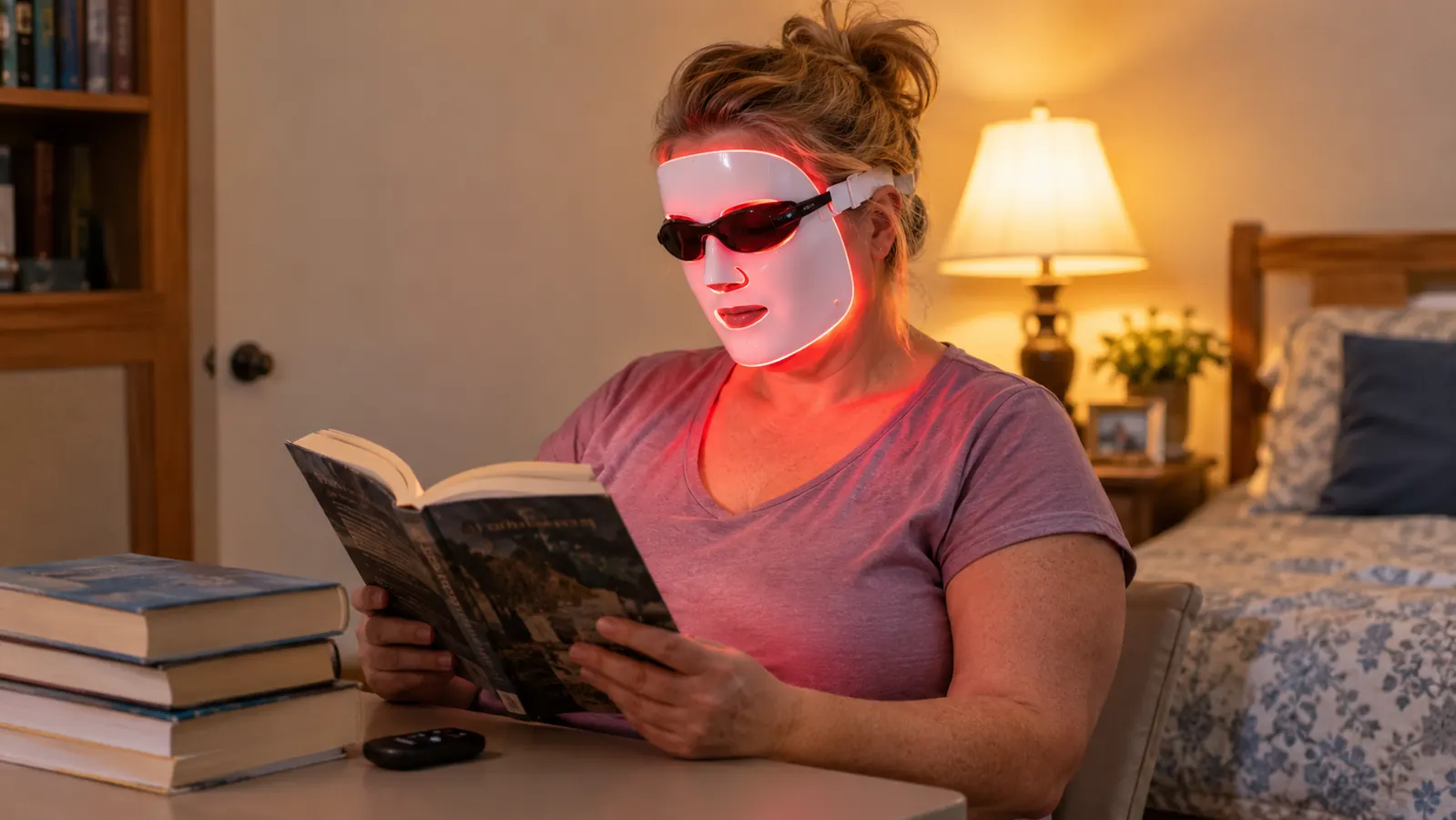
I bought the Shark CryoGlow in February, after a winter of looking at the same two inches of skin under my eyes in the bathroom mirror at a quarter past six every morning. I am fifty-seven, retired after twenty-nine years as a dental hygienist, and I spent most of those years leaning over patients with a loupe and a scaler. My face has opinions about that now. I am not a person who buys gadgets on impulse. I read the manual twice before I turned anything on, which Dan, my husband of thirty-four years, finds funny and I find necessary.
What got me to open my wallet was not the red light. Every mask I had looked at promised red light. What got me was the cooling. I run warm, I do not lie still well, and the idea of twenty minutes with something warm pressed against my face in a spare bedroom in July held no appeal at all. The Shark CryoGlow has clip-on chill pads that sit under the eyes, and it comes with a remote, so I am not pawing at my own face trying to find a button I cannot see. It arrived with the LED storage bag, a USB-C charging cable and plug, and the pads. I have used it most evenings since. What follows is what that actually looked like, including the parts I did not love, and the parts I would tell you about before you spend anything.
The Quick Verdict
The under-eye cooling is the reason I kept going past week three, and the remote is the reason I never skipped a session out of pure laziness. It is not fast and it is not inexpensive, but it is the first at-home light mask I have stuck with for six months.
Amazon Check Today's Price →The chill pads are the part I would buy again
Six months of evenings on a folding table in the spare bedroom, and I still reach for it. If you want to see the full spec sheet and today's price, the listing is here.
Amazon Check Today's Price on Amazon →How I've Used It
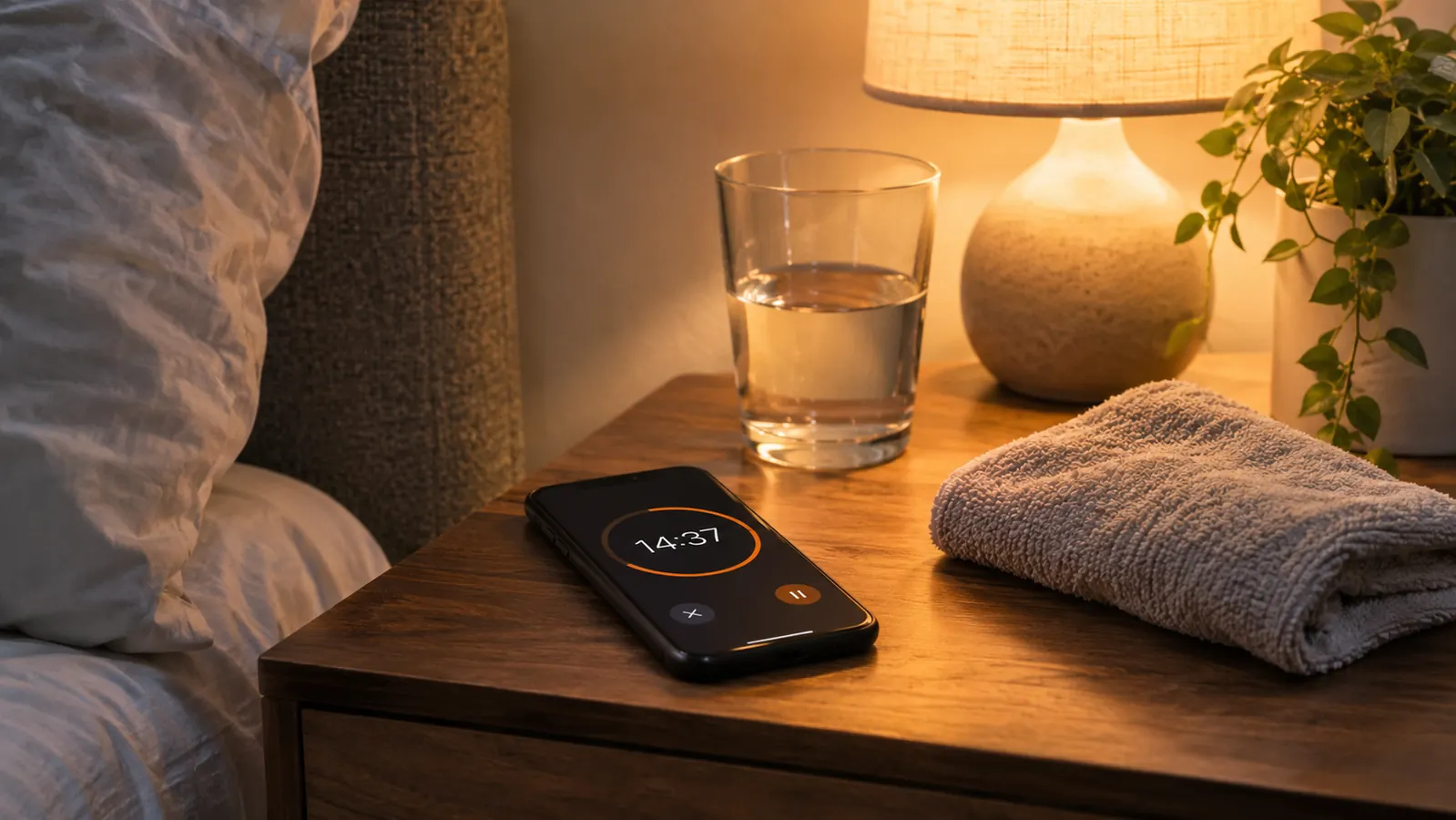
My setup is not glamorous. The spare bedroom of our single-story house in Boise has a folding table by the closet, and that is where the mask lives, next to a lamp and a stack of library books. I use it in the evening, usually after dinner and before the ten o'clock news, while Dan watches something in the other room. I put on eye protection, sit down, and start a program with the remote. I time the session on my phone so I am not guessing at anything. Then I take the mask off, put it in the storage bag, and go to bed.
Most days of the week. Not every day. I missed a stretch in April when we had family visiting, and another in June when the garden took over my evenings entirely. I am telling you that because every review you read about a device like this seems to describe a person with perfect discipline, and I am not that person. What I can tell you is that six months in, this routine has stuck better than any serum I have ever bought, and I think the reason is simple. Sitting down for it is easy. There is nothing to measure, nothing to layer, and nothing to wait to absorb.
I want to be clear about what this is for me. It is part of how I look after my skin, the same way a walk in the foothills is part of how I look after my knees. My dermatologist said it was fine to try. I would say the same thing to you in reverse: ask yours before you start, particularly if you have photosensitivity, take a medication that makes you sensitive to light, are pregnant, or have any history of skin cancer. That is not a disclaimer I am tacking on at the end. It is the first thing I would say if you were sitting at my kitchen table.
What Comes in the Box and What the Mask Actually Does
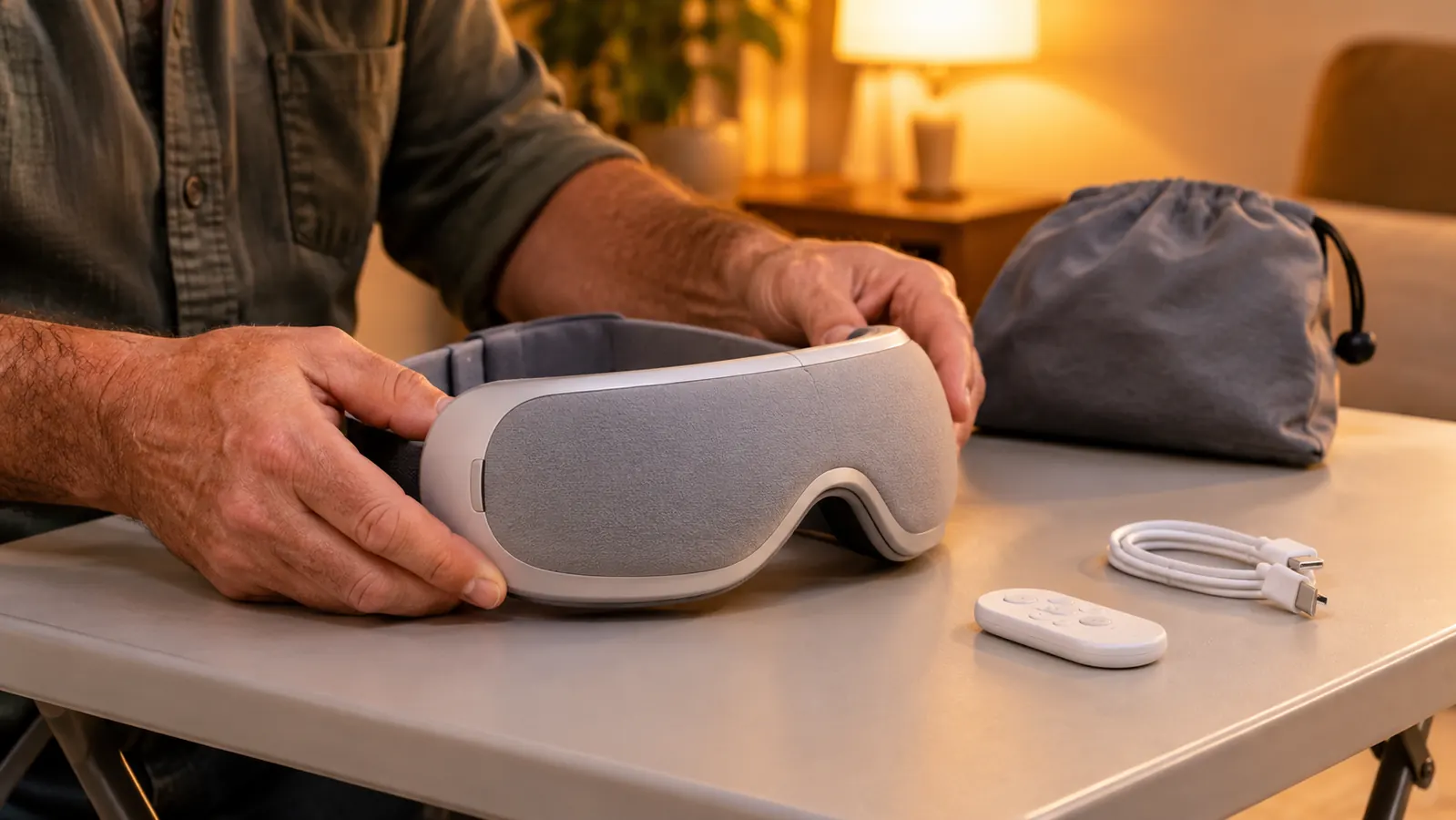
The box has the mask itself, a set of clip-on chill pads, a remote, a USB-C charging cable with a plug, and an LED storage bag. The mask weighs about a pound and a half, 675 grams, and the packaged dimensions are roughly eight by six by nine inches, so it does not need a dedicated drawer. It runs on its own battery at 7.2 volts, which matters more than I expected. No cord across the floor, no wrestling with an outlet, and I can sit wherever I want. I charge it about once a week.
The light is red, blue and deep infrared, and Shark developed it alongside optical light experts and engineers, which is the kind of line that usually makes me roll my eyes. What made me pay attention instead was the testing claim: clinically tested on 119 participants by an independent third party, and FDA-cleared. I am a hygienist, not a researcher, and I cannot verify any of that from my kitchen. But I can tell you that a named participant count and a genuinely independent third party are the two details I look for, and most of the masks I compared did not have both of them.
The four programs are named Better Aging, Skin Clearing, Skin Sustain, and Under-Eye Revive. Shark frames them around fine lines, blemishes, overall skin condition, and the under-eye area. The mask is listed as suitable for all skin types, which I take with the usual grain of salt, since my skin is on the dry side and dryness is less a skin type than a personality.
The Four Programs, and the Two I Actually Use
I tried all four in the first month, mostly out of the same instinct that makes me read a manual twice. Better Aging is the one I use most. It is the one I think of as the default, and it is the one I would keep if Shark let me pick only one. Under-Eye Revive is the second, and it is the reason I bought the thing in the first place, since the chill pads only make sense paired with it. I run that one with the pads clipped in and the cooling on, and it is the most pleasant part of my evening, which is a strange thing to say about a face mask.
Skin Clearing I use when my skin is behaving badly, which for me is usually the week before a trip or right after I have been careless with a new moisturizer. I am fifty-seven and I still get the occasional blemish along my jaw, and I have stopped being surprised by it. Skin Sustain I use least, not because there is anything wrong with it, but because in my head it overlaps with Better Aging, and I only have so much patience for choices at nine in the evening.
Here is the honest part. I cannot tell you which program did what. I changed nothing else about my routine for the first three months, and then I added nothing and subtracted nothing on purpose. What I can tell you is that my skin felt less tight in the mornings, that a dry patch on my left cheek that has been there since my forties was less noticeable by April, and that the two lines between my brows did not disappear. Anyone who tells you lines disappear is selling something. I am telling you what I saw in my own mirror, and that is all it is.
The two lines between my brows did not disappear. What changed is that the skin around them stopped looking tired, and to me those are different problems.
What Changed Over Six Months, and What Didn't
By week three I had stopped dreading it, which is the milestone I actually care about. Devices like this fail because you stop using them, not because they do nothing. By week six, Dan had borrowed it twice, once for the cooling on a hot evening and once purely out of curiosity, and he has opinions now, which he will share whether or not you ask him.
By month three, the difference I noticed most was not in lines at all. It was in how my skin took moisturizer afterward. I use the same drugstore cream I have used for a decade, and it went on differently, sat differently, and my face did not feel tight by mid-morning. I have no explanation for that beyond the obvious one, which is that skin somebody has been looking after behaves differently from skin that has been ignored, and a mask that makes you sit still for a few minutes a night is one way of looking after it.
What did not change: the pores on my nose, the sun spots across my right cheekbone from twenty years of youth, and the general architecture of my face. It is a light mask, not a lift. I want to be plain about that, because the marketing around at-home devices has gotten very confident, and I have spent enough time in enough dentists' chairs to know what confidence is worth when nothing is backing it up.
The Fit, the Battery, and the Fiddly Bits
I would guess face shape matters more than the marketing lets on. It sits comfortably on me. Dan, who has a broader face and a nose that has been broken twice, tried it twice and handed it back saying it felt like it was sitting too high on him. I have no fix for that and neither does he, so that is worth knowing before you buy.
The chill pads are the piece I would protect with my life. They clip on, they do the under-eye cooling, and they are small enough that I have come close to losing one twice. They live in the storage bag now, always, no exceptions. That is a rule I made after finding one on the bathroom floor at eleven at night.
The battery is fine and unremarkable, which is exactly what I want from a battery. It charges by USB-C and I top it up about once a week, usually on Sunday while I am doing laundry. The remote is the small thing that saved the whole device for me. Reaching up to press something on your own face while wearing a mask is exactly as awkward as it sounds, and the remote means I do not have to.
The storage bag is a bag. It is nice that it exists. I would not buy the device for the bag.
What I Liked
- The clip-on chill pads make the under-eye program genuinely pleasant, which is why I did not quit
- The remote means no fumbling with a mask already on your face
- Battery powered at 7.2 volts, so no cord and no outlet
- Four named programs, and the two I use most cover the areas I actually care about
- FDA-cleared, and clinically tested on 119 participants by an independent third party
- Packs down small at roughly eight by six by nine inches, with a storage bag that keeps the pads together
Where It Falls Short
- It is not a quick fix. Six months in, the lines between my brows are still there
- The chill pads are small and easy to misplace
- Fit is what it is. Dan found it sat too high on his face and stopped using it
- Charging once a week is one more thing on the list
- The initial cost is real, and I would not call this an impulse buy
Who This Is For
This is for someone who has already decided they want to do something about their skin at home, and who wants a routine they will actually keep. If you are the kind of person who bought a jade roller in 2019 and used it for nine days, the remote and the cooling pads are the two features most likely to change that pattern, because they remove the two reasons people quit: discomfort and fiddling. It is also for someone who wants a named, independently tested device rather than an unlabeled panel from a marketplace. And it is for skin that is on the drier, thinner side of fifty, which is mine, though Shark lists it for all skin types.
Who Should Skip It
Skip it if you want visible line reduction inside a month. Skip it if you will not sit still for a session most evenings, because the device does nothing at all on the shelf. Skip it if you have photosensitivity, take a medication that causes light sensitivity, are pregnant, or have a history of skin cancer, unless your doctor or dermatologist has told you otherwise, and that is a real conversation to have rather than a line to skim past. And skip it if the current price would make you resent the thing every time you looked at it, because that is a poor way to start a habit.
Six months in, this is still the one on my folding table
If you are going to do this at all, do it with something that publishes a participant count. The full specs and today's price are on the listing.
Amazon Check Today's Price on Amazon →