
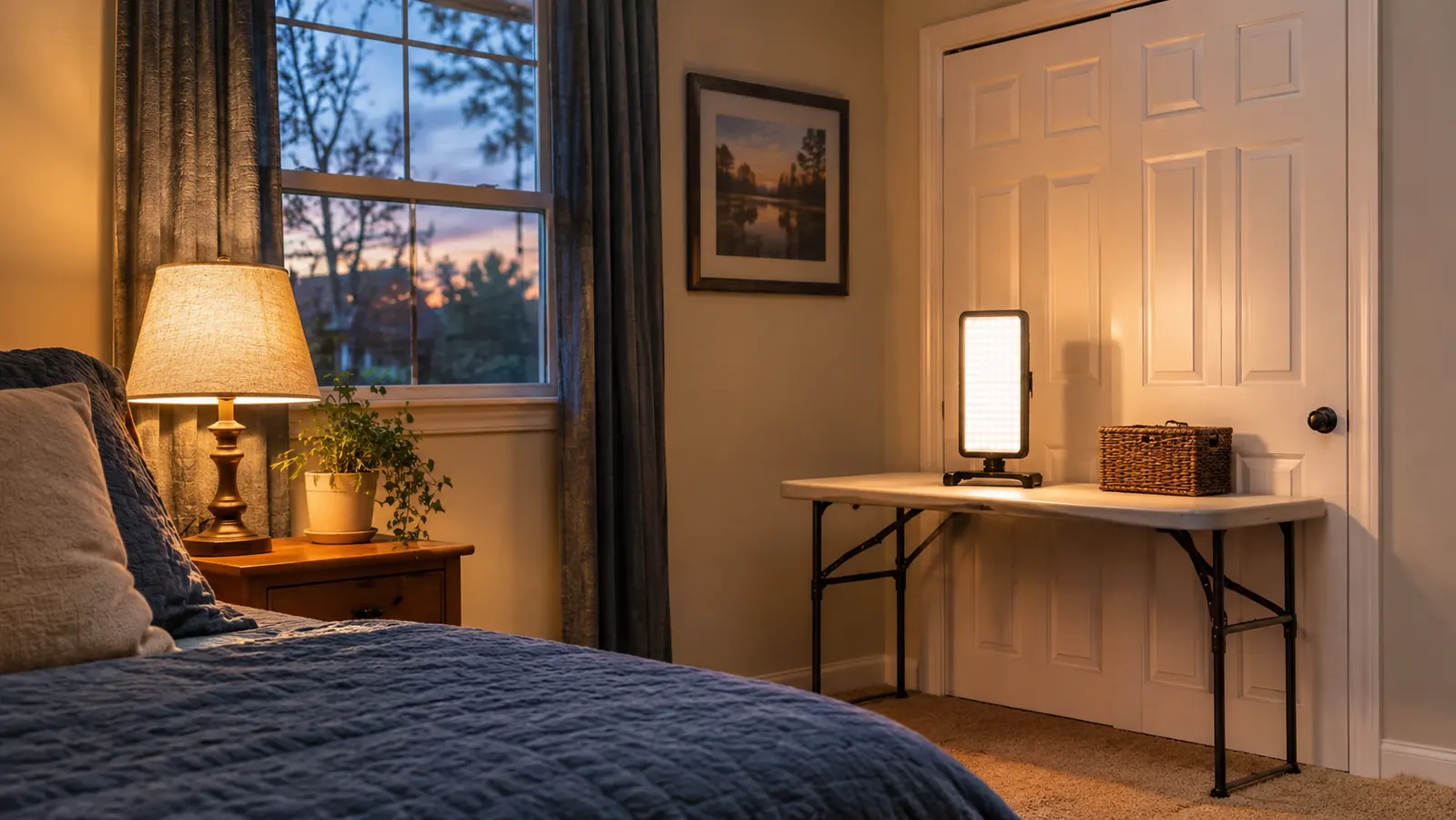
The first thing you should know is that I did not want to like it. I am 57, I spent my working life as a dental hygienist, and I have a low tolerance for anything that promises a lot. What got me looking was my knees on the Boise foothills trails and a face that had gone years with nothing on it but soap and sunscreen. My dermatologist said trying red light at home was fine. So I bought the Bestqool BQ60 panel, read the manual twice, and set it up on the folding table in the spare bedroom.
Here is the short answer before I get into the details. If your goal is to light a broad area at home, most evenings, without holding anything, the panel shape is the one that fits that job, and the Bestqool BQ60 is the one I have actually used. If your goal is to put light on one small spot with precision, or you need something that goes in a bag, a handheld wand fits that job better. The wavelengths people talk about are the same on both. What differs is the physical object, and the physical object is what decides whether you keep the habit past February.
| Bestqool BQ60 panel | Handheld red light wand | |
|---|---|---|
| Coverage in one sitting | Lights a broad area, both knees at once if you sit square to it, then the same sitting covers your face | One small area at a time, a knee, an elbow, a cheek, because there is one hand and one small head |
| Your hands | Free. It sits on the table and you sit in front of it | Holding it up for the whole session, and the shoulder starts asking how much longer |
| Distance from the light | Fixed. The panel does not move, so three inches stays three inches | Drifts, because a held hand drifts, and distance is most of what makes a measurement mean anything |
| One small spot | Clumsy. The light spills past the spot onto everything around it | Easy. You put the head exactly where you want it and the light stops there |
| Travel and small spaces | 4.8 pounds plus a cord, and it wants a table and an outlet | Goes in a bag and works on a bathroom counter |
| Getting started | Three modes to sort out, which cost me an evening with the manual | You point it and go, nothing to read |
| Session length | One pass covers the area, so sessions stay short | You work across the area in sections, which takes longer |
| Best for | A daily at-home routine across a broad area | Spot work, travel, and small private spaces |
What the Bestqool Panel Actually Is
What arrived was a panel measuring 8.4 by 2.1 by 13.1 inches, 4.8 pounds, standing on its edge. The listing gives 105W of power, dual-chip LEDs at 660nm red and 850nm near infrared, and three modes. The number I keep coming back to is 95.6 mW/cm2, measured at 3 inches. That figure is not a promise about anything. It is a measurement taken at a specific distance, and the distance is the part you control.
The first evening I set it up, I did the thing I always do: I got out the tape measure. The panel went on the folding table, I sat down in the chair, and I checked the gap between my knee and the face of the panel. Three inches turned out to be closer than I expected, closer than felt natural, and I had to move the chair in twice before I believed the number. Two inches felt like nothing at all and four inches felt comfortable and roomy. I did my first month of sessions at the distance that felt comfortable, and only after that did I start moving the chair in to where the figure on the listing actually lives.
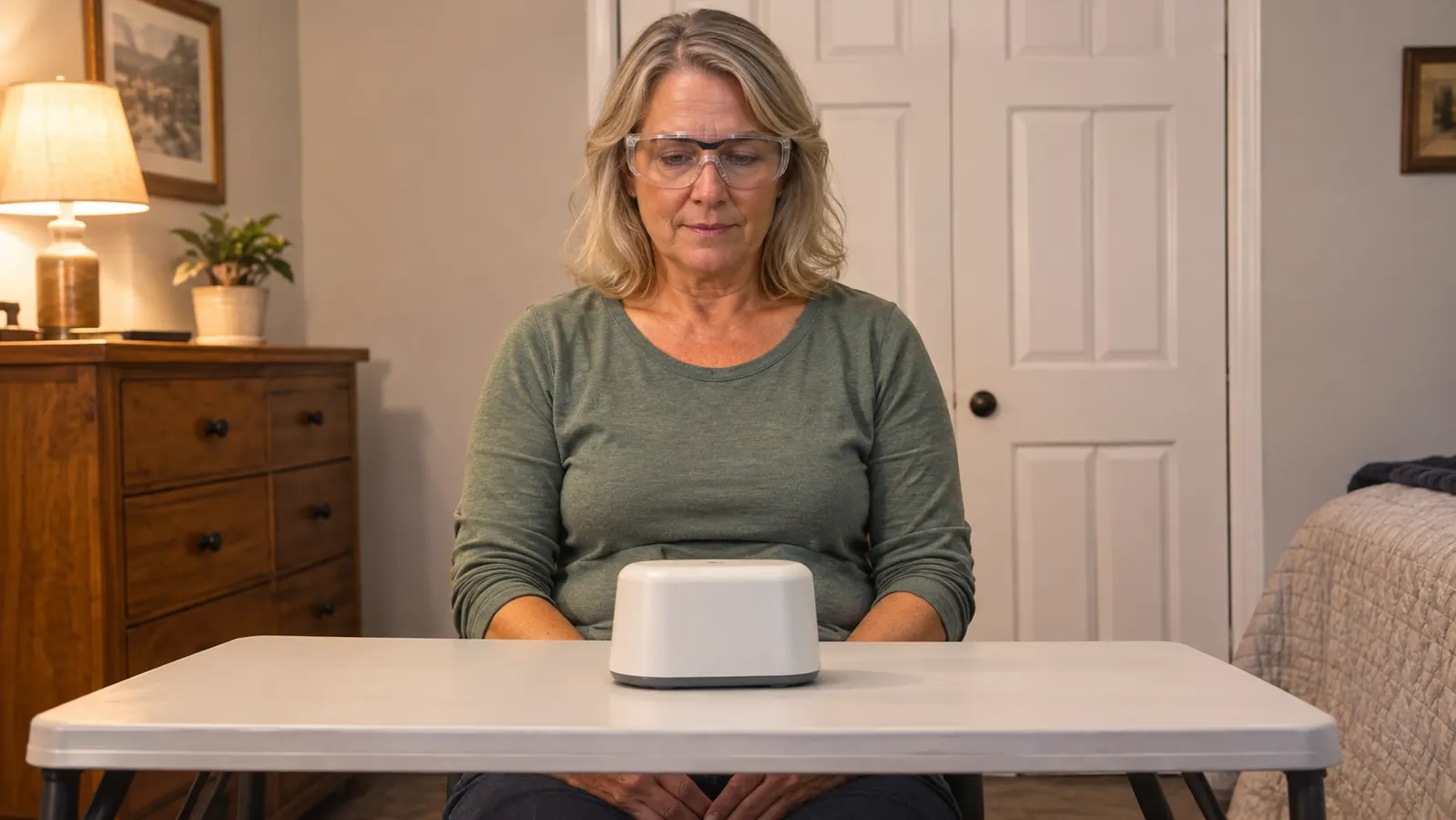
I read the manual twice, which is what I do with anything that has modes. Then I settled into one mode for my evening sessions and stopped fiddling with it. Goggles on, phone timer running, sitting square to the light. That is the entire routine. There is nothing clever about it, which is probably exactly why I have kept it up for a year instead of three weeks.
It lives on the folding table by the closet in our spare bedroom, in the single-story house we have here in Boise. My husband Dan borrows it now and then and I move it back afterward. It weighs less than a bag of flour, so moving it is not a chore, but it does want a table and a wall outlet. It is a sit-in-front-of device, not a carry-around device, and that single fact explains most of what follows.
What the Other Option Actually Is
The thing most people weigh against a panel is a handheld wand: A small head on a handle that you hold against the area you want to light. Same general idea, completely different shape, and the shape is the entire argument. A wand puts light exactly where you point it and nowhere else. A panel floods a whole area and lets you sit still while it does.
I will be straight with you, because I would want the same from a friend. I have not owned a wand. What I can do is tell you what the shape implies, and after a year of sitting in front of a panel most evenings, the implications are not subtle. Two objects, two different jobs. The mistake I see people make is buying one and expecting it to behave like the other.
Where the Bestqool Panel Wins
Coverage is the first thing. Sitting square to the panel, the light reaches both knees at once, and then the same sitting reaches my face without me dragging furniture around. A wand does one area per session, because you have one hand and the head is small. If your list has four or five places on it, the panel finishes the list and the wand gets through two of them before your arm gives out.
Take a Saturday in September. Dan and I walked the foothills in the morning, a shorter loop than we used to do, and by the evening both knees had opinions. I sat down square to the panel, goggles on, phone timer running, and the light covered both of them at once without me turning anything or repositioning a thing. When the timer went I turned the chair, put my face into the same light, and started a second count. One sitting, two jobs, one device that never left the table between them.
The second thing is your hands, and I did not expect this to matter as much as it does. A wand session is a gripping session. Your arm is up, your wrist is working, and somewhere around the second half your shoulder starts negotiating. With a panel there is nothing to hold. I sit down, put my hands in my lap, and the light does what it does while I think about something else entirely. That sounds like a small convenience. It is the reason I still do this on a Tuesday in February, and it is the reason a wand would likely be in a drawer by now.
The third thing is distance, and this is the one I would underline. Bestqool rates the panel at 95.6 mW/cm2 at 3 inches. That number only means anything if 3 inches is where the panel stays, and a panel on a table stays where you put it. Hold a wand in your hand for a few minutes and notice how often three inches becomes four, then five, then whatever feels comfortable in the moment. Consistent distance is not a feature on a spec sheet. It is what happens when the device does not move.
A panel does not drift. Three inches stays three inches for the whole session, which is the only way a number measured at three inches means anything.
Both knees lit at once, hands free, on the ordinary nights
The Bestqool BQ60 is 4.8 pounds of panel that sits on a table and stays put: 105W, dual-chip 660nm and 850nm LEDs, three modes, and 95.6 mW/cm2 rated at 3 inches, which is the distance a table holds for you.
Amazon Check Today's Price on Amazon →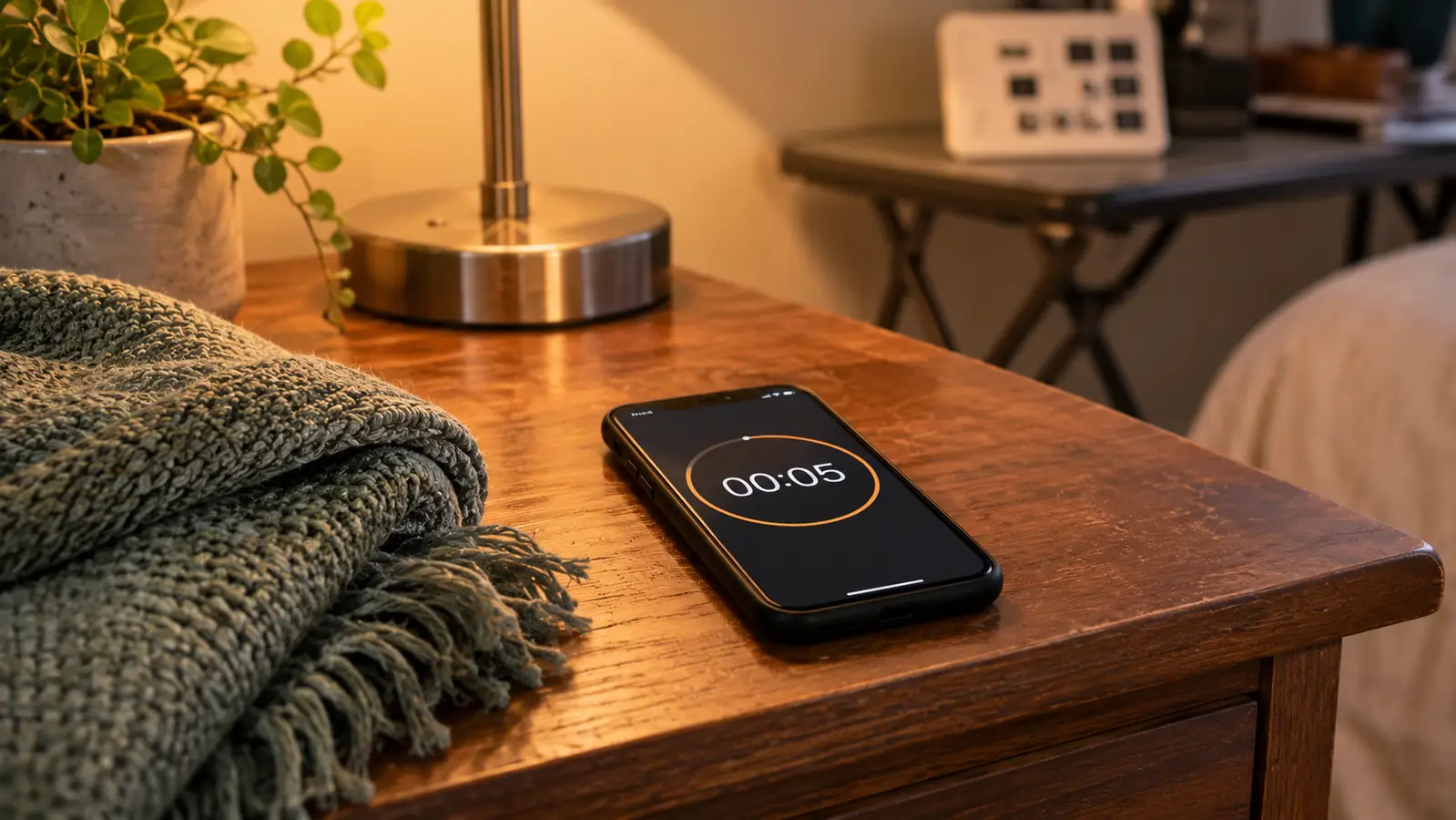
Where a Handheld Wand Wins
Precision goes to the wand and I am not going to pretend otherwise. If the thing that bothers you is one knuckle, the side of one elbow, or a small patch on your cheek, a panel is genuinely clumsy. The light spills past the spot onto everything around it, and you end up sitting at an angle trying to shade the parts you did not want lit in the first place. A wand puts the light exactly where you aim it and stops.
Portability goes to the wand as well. Our house is one story and the panel still stays in one room, because it needs a table, an outlet, and a place to stand. If you travel, if you spend weeks somewhere that is not your own spare bedroom, or if your only private space is a bathroom counter, a wand goes in the bag and the panel stays home. 4.8 pounds is not heavy. It is still a cord and a piece of furniture.
The last one is control in the moment. With a wand you decide, second by second, where the light is. That is worth something if you are the sort of person who wants to feel in charge of the session rather than sit still and let a table lamp do the work. I am not that person. Plenty of people are, and they should buy accordingly rather than buy what I bought.
What I Would Check Before You Buy Either One
Whatever you buy, the boring checks come first. Both a panel and a wand put bright light near your eyes, so goggles are not optional, and the pair that came in my box live on the table next to my phone. If you take a medication that makes you light sensitive, if you have a condition that makes your skin react to light, if you are pregnant, or if you have a history of skin cancer, that is a conversation with a doctor or a dermatologist before you spend anything at all. Mine told me it was fine for me to try. Yours may say something different, and their answer is the one that counts.
Before I bought anything, I tried the free version of all this first. I stretched on the bedroom rug, I rolled my knees over a foam roller, and I iced after the longer hikes. None of it was wrong, exactly, and none of it lasted past the first month, because every bit of it needed a second setup and a second decision at nine in the evening. That is the test I would put to any device now. It is also the test the panel passed without me noticing: it was already on the table, so there was nothing left to decide.
The other check is whether the shape fits your real evenings, not your ideal ones. The real ones, after dinner, when the dishes are still out and you are tired. A panel needs a table and a few quiet minutes in one room. A wand needs one free hand and a place to stand. Whichever one you can picture yourself doing on a Tuesday when you do not feel like it is the one worth buying. The other one becomes a shelf ornament with a cord.
What I Liked
- Lights a broad area, both knees at once if you sit square to it
- Hands free for the whole session, so nothing gets tired and nothing gets skipped
- Distance stays put, which is what makes the 95.6 mW/cm2 at 3 inches figure mean something
- 660nm red and 850nm near infrared on dual-chip LEDs, three modes, one panel
- 8.4 by 13.1 inches and 4.8 pounds, so it moves between rooms without a second thought
Where It Falls Short
- It wants a table and an outlet, so in practice it lives in one room
- The light spills past the spot you aimed at, which is annoying on a small area
- Three modes meant an evening with the manual before I settled on one
- I time my sessions on my phone, which is one more thing to remember
- It is a sit-still device. You cannot fold laundry in front of it
Who Should Buy Which
Buy the Bestqool panel if your list has more than one place on it and your sessions happen at home. Knees, then face, then whatever else is complaining, all in one sitting, hands free, distance fixed. That is what the 105W, the dual-chip 660nm and 850nm LEDs, the three modes, and the 8.4 by 13.1 inch face of it are for. It is rated 4.6 across roughly 1,900 reviews, which suggests other people also kept using theirs, but the rating is not the reason to buy. The reason is that the shape matches a daily habit at a table.
Buy a wand if your problem is one small spot, or if your routine happens somewhere that is not your own spare bedroom. It will not cover a list. It will not sit still while you relax. But it will go where you go, and it will put light precisely where you point it, and for a lot of people that is the entire job. Neither purchase is wrong. Buying one and expecting the other is where people get disappointed.
One more thing before you decide, and then I will get out of your way. I would not buy both at once. It is tempting to hedge, to get the panel for the house and the wand for the bag, and what actually happens is that one of them becomes the thing you use and the other becomes the thing you explain to guests. Pick the shape that matches where you genuinely stand at nine in the evening, in the room you genuinely stand in, and give it a couple of months before you reconsider anything. If you get to spring and the routine has held, you know something real. If it has not held, the answer was never going to be a second device.
If the panel shape fits your evenings, this is the one on my table
105W, 660nm and 850nm on dual-chip LEDs, 95.6 mW/cm2 at 3 inches, three modes, and 4.8 pounds of it. Rated 4.6 across roughly 1,900 reviews. The rest is just showing up on the ordinary nights.
Amazon Check Today's Price on Amazon →