

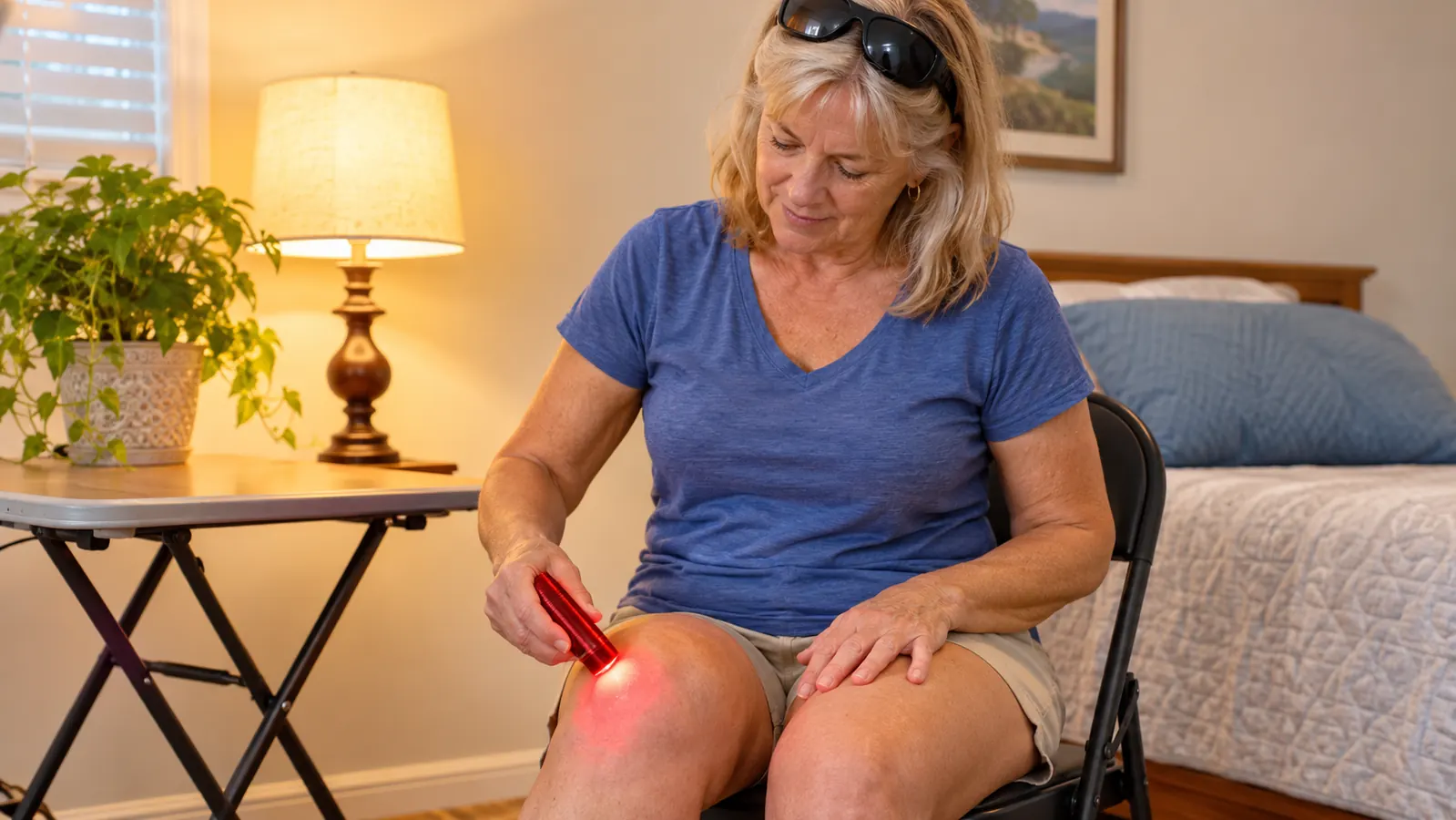
The box sat on the folding table in our spare bedroom for nine days before I opened it. I am 57, a retired dental hygienist, and I have spent enough years around equipment to be suspicious of anything that arrives with a large promise and a thin manual. What finally got me to unzip the case was simpler than enthusiasm. My knees had been stiff since the last hike in the Boise foothills, and my dermatologist had already told me she saw no reason I could not try red light at home. So I read the manual twice, set it up by the closet, and started using the Lifepro LumiCure wand in the evenings.
Six weeks in, what surprised me was not any single dramatic moment. It was that the thing kept fitting into my day. That is the whole reason for this list. Most devices I buy for myself get used hard for two weeks and then migrate to a drawer, where they live out their remaining years beside a dead fitness tracker. The Lifepro wand stayed on the table because the routine around it is short and boring, which is exactly what a routine should be. Below are the ten reasons it slotted in, written the way I would tell a friend at my kitchen table, plus the one part I would skip if I were buying again.
One Wand, One Button, Six Weeks of Evenings
The Lifepro LumiCure is a handheld red light therapy wand with a single touch button and three wavelengths. It is a home device, not a clinic, and that is the point.
Amazon See today's price on Amazon →One button means no menus at 9pm
By the time I sit down in the spare room, I have already talked myself into and out of the session twice. What gets me going is that there is nothing left to decide. The LumiCure runs off a single touch button, so I press it, start the timer on my phone, and that is the whole interaction. No screen to squint at in a dim room, no sequence of settings to remember incorrectly. A tool that asks nothing of me at nine o'clock is a tool I will actually pick up.
Six hours of battery turns charging into a weekend chore
The listing gives an average battery life of about six hours. I have never run it down to nothing, because I top the battery up on Saturday mornings while the laundry runs. That is the difference between a device I use and a device I resent. Anything that needs a nightly charge becomes a nightly negotiation, and I lose those. A battery that carries me through a week of short evening sessions does not enter the negotiation at all.
At 6.35 ounces it is light enough to hold one-handed
The listing puts the wand at 6.35 ounces, which is close to the weight of a full coffee mug minus the coffee. I know that because I weighed it against things in my kitchen the first week, the way I do with anything new. It matters more than it sounds. When you are holding something against a knee for several minutes, a heavy device starts to feel heavy long before you are done. This one does not, and the light build is one of the few features the listing actually calls out.
The wand shape reaches knees and shoulders without a stretch
The listing measures it at 9.06 by 5.91 by 1.97 inches and lists the form as a massage wand, and that length is doing real work. I can sit in a chair, rest my heel on the opposite knee, and reach the outside of the joint without twisting myself into a pretzel. Same for the back of my shoulder, which is the spot that always made me give up on anything requiring two hands and a mirror. If you have ever tried to hold a flat panel against your own shoulder blade, you already know why the shape matters.
Face and body use one tool instead of two
The target use on the listing is body and face, which sounds like marketing until you count what it replaces. I had been pricing out a separate face mask and a separate panel for my knees. Two devices, two places to store them, two routines to keep straight. Instead there is one wand on the folding table. In the evening I do my knees first, then a shorter pass along my jaw and cheekbones with my eyes closed and my eye protection on. One thing to remember, one thing to put away.
Six weeks in, the wand is still on the folding table. That has never happened with anything else I have bought for myself.
Sessions are short enough to time on my phone
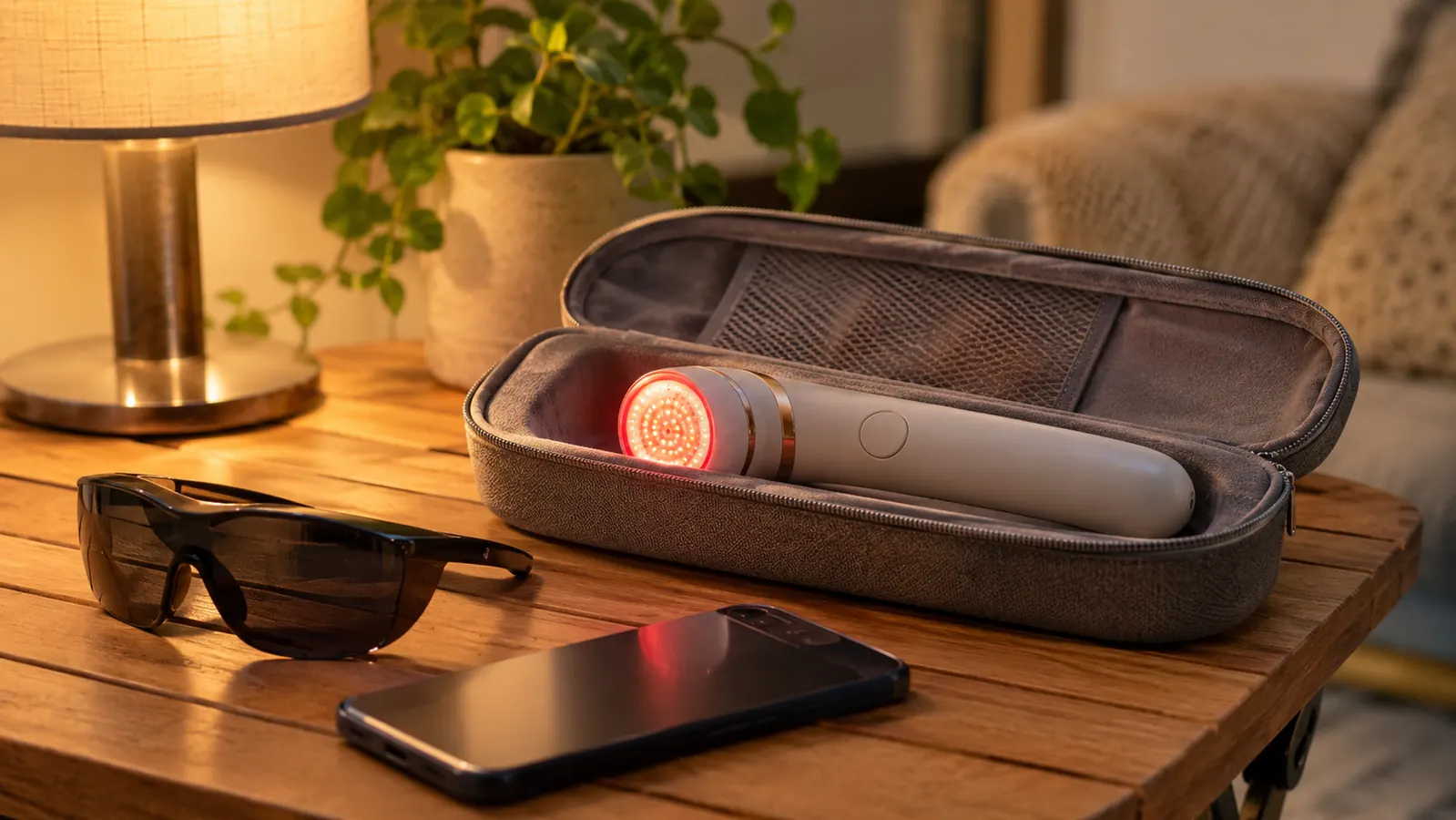
I time mine on my phone, usually while a podcast is going in the background. Ten or so minutes per area is where I landed, and I want to be clear that this is my own habit and not a number printed in the manual. The point is that the session is short enough that I do not have to build an evening around it. I can do it after the dishes and before the ten o'clock news. If I skip a night, nothing falls apart.
The wrist strap and case keep it off the drawer floor
The listing mentions a wrist strap and a zippered case, and both turned out to be more useful than I expected. The strap means I can loop it around my wrist when I set the wand down mid-session so it does not roll off the folding table onto the carpet. The case means the whole thing has a home. Devices that live loose in a drawer get tangled up and forgotten. Devices that live in a case come back out, and coming back out is most of the battle.
Dan can borrow it without a tutorial
My husband Dan is 60 and has a firm policy of not reading manuals. He picked the wand up on a Tuesday, asked one question, and has borrowed it for his shoulders a few evenings a week since. That is the real test of whether a device fits a household. If using it requires a lesson, it becomes mine and only mine, and the second person in the house never gets anything out of it. One button solves that problem before it starts.
Home grade is the right grade for a kitchen table routine
The listing grades it as a home device rather than a clinical one, and I think that framing matters. I am not trying to recreate a clinic in my spare bedroom. I am trying to do something small and repeatable most evenings, the way I walk in the morning. A home-grade tool sets the right expectation, which is that this is a routine and not a procedure. My dermatologist told me it was fine to try, and I have kept it in that frame the whole way.
Three wavelengths in one pass instead of three devices
The LumiCure combines three wavelengths according to the listing. I cannot verify wavelengths with anything I own, so I will not pretend otherwise. What I can tell you is what it changes practically. I am not lining up three tools and three separate sessions across an evening. One pass, one device, done. Whether the light does anything meaningful for my skin is something I honestly cannot judge at six weeks, and I am not going to tell you it does. I will tell you the routine stuck, because that is the part I can actually observe.
What I'd Skip
There are a few things I would skip if I were starting over. I would skip buying a second device before giving the first one two honest months, because the second device is usually a way of avoiding the first. I would skip longer sessions on the theory that more must be better, since I have done that with other things and it never made the routine stick. I would skip using it near the bathroom sink, because the listing is clear that it is not water resistant and I would rather not find out the hard way. And I would skip treating any of this as a substitute for a dermatologist. If you have photosensitivity, take a medication that makes your skin sensitive to light, are pregnant, or have a history of skin cancer, talk to your doctor before you spend a dollar on any device.
If Your Evening Routine Needs One Less Thing To Think About
A handheld wand, a single button, and a case that keeps it where you left it. That is the whole pitch, and for me it was enough to keep it on the table.
Amazon Check Today's Price on Amazon →